There comes a point when one realises that not every thought need be turned into a lesson.
For many years my writing has centred upon the study and practice of divination. Through books, articles, classes, and conversations I have sought to explain methods, clarify principles, and preserve traditions that might otherwise be overlooked. I have never regretted this. Teaching is, in its own way, a form of service. There is a particular satisfaction in helping others navigate subjects that once seemed obscure or bewildering to oneself. Plus, I have never forgotten the generosity of my own teachers and mentors.
Yet not every worthwhile subject lends itself to instruction.
Some matters are better approached through reflection than explanation. There are questions that resist reduction to lists, systems, and techniques. Questions of fate and freedom. The role of beauty in human life. The relationship between contemplation and action. The meaning of tradition in an age that prizes novelty. The curious manner in which memory transforms the past. Such subjects are perhaps best explored by wandering rather than marching, by meditation rather than demonstration.
This blog exists to provide a home for such reflections.
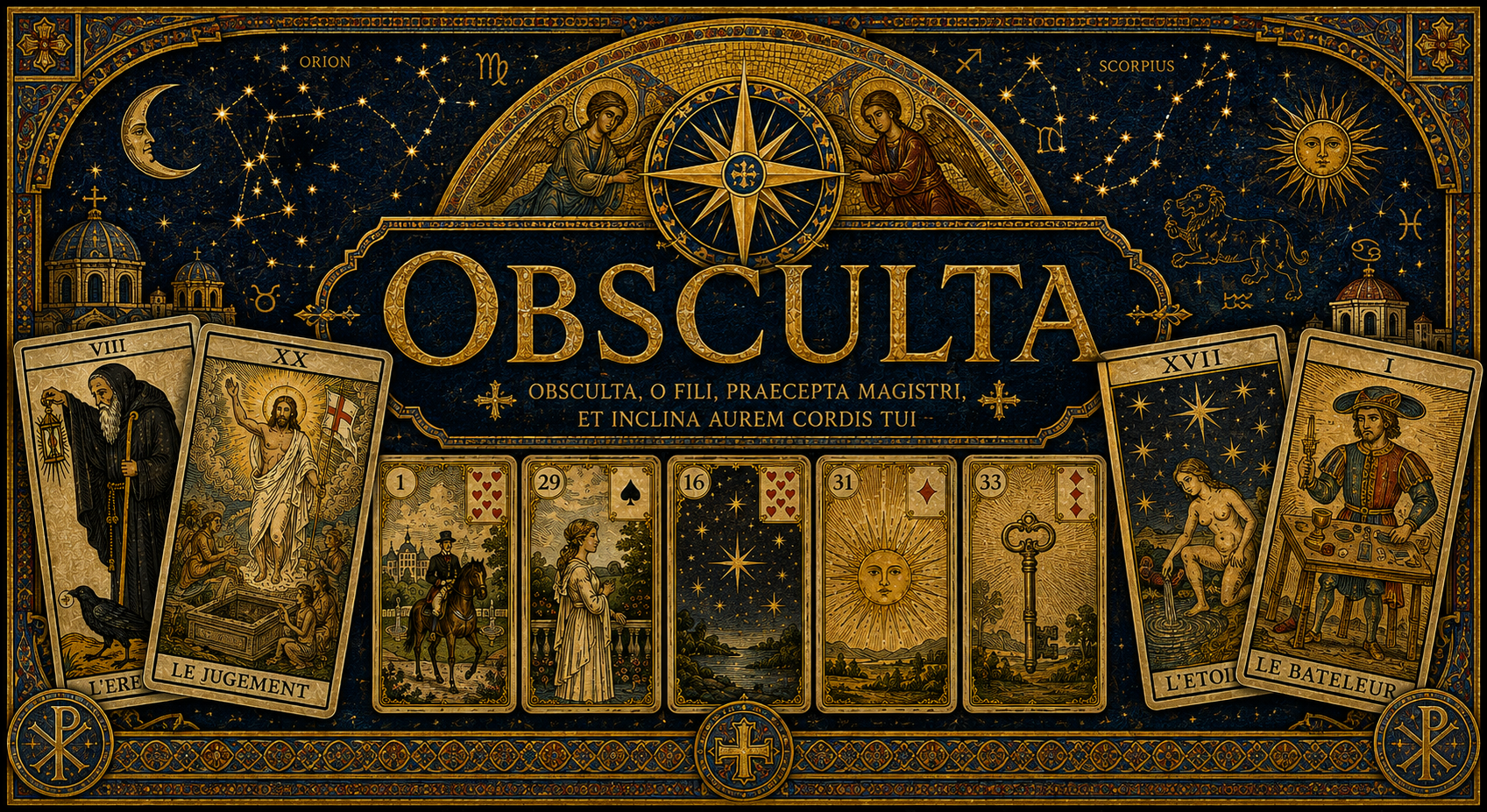
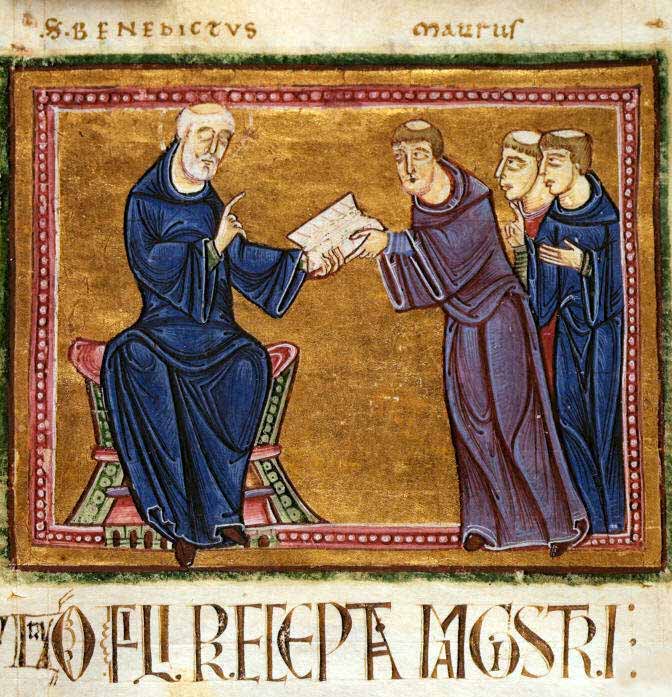
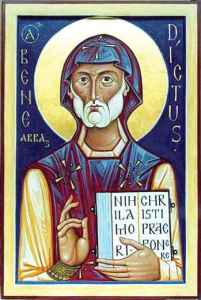
The name Obsculta is borrowed from the opening word of the Rule of St Benedict:
“Obsculta, o fili, praecepta magistri, et inclina aurem cordis tui.”
Rule of St Benedict
Usually translated as:
“Listen carefully, my son, to the master’s instructions, and attend to them with the ear of your heart.”
Rule of St Benedict
It is a phrase that has spoken to me for many years, not only as a (returning) Catholic but also as someone interested in divination, symbolism, and interpretation.
Most of us are taught to value speaking more than listening. We inhabit a culture of opinions, reactions, and constant commentary. There is often an assumption that every question is ultimately subjective and that meaning resides primarily in our individual preferences. We are encouraged to cultivate a critical mind, which is undoubtedly a good thing, but often at the expense of cultivating a receptive one.
St Benedict proposes something rather different.
The Rule begins not with action, achievement, or self-expression, but with listening. More importantly, it calls us to listen with the heart. This should not be mistaken for mere sentimentality. In the Christian tradition, the heart is not simply the seat of emotion but the centre of the person, where intellect, will, conscience, and desire meet.
To listen with the heart is to listen with one’s whole being.
I have increasingly come to believe that such listening is a rare and necessary skill.
It is necessary in prayer. One cannot hear God whilst constantly speaking over Him. It is necessary in friendship, where genuine understanding requires attention rather than merely waiting for one’s turn to talk. It is necessary in reading, where a book must be approached with a degree of humility if it is to reveal what it contains rather than merely reflect what we already think.
And, perhaps surprisingly, it is necessary in divination.
Whatever one may think about the divinatory arts, the best practitioners are invariably attentive observers. They listen to symbols. They listen to imagery. They listen to stories. They listen to the questions brought before them. Above all, they listen to the often neglected dimensions of human experience that do not always fit neatly into the categories provided by modern life.
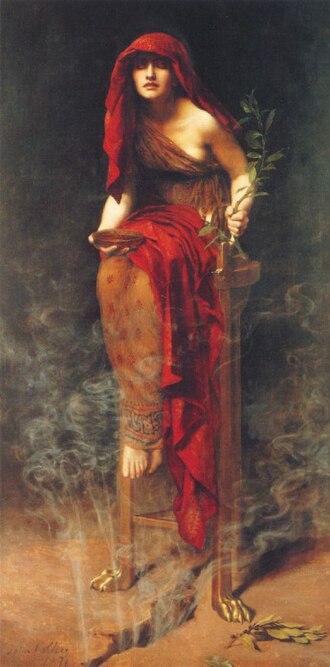
Moreover, each oracle possesses a voice of its own. Whether it speaks through cards, stones or the planets, each has its own distinctive character. The Petit Lenormand does not speak in the manner of the Rider–Waite–Smith. This is not animism, but rather an acknowledgement of the eikōn as a visual language. Divination and fortune-telling depend upon our ability not merely to read that language, but to attend to its voice.
This is one reason I have always regarded divination less as an occult science than as an interpretative art. At its best, it is a discipline of attention. It requires one to look carefully, to consider patiently, and to resist arriving too quickly at conclusions. In that respect it has more in common with reading poetry, contemplating a painting, or engaging in lectio divina than many people might suppose.
To listen with the ear of the heart is, in part, to acknowledge that reality may contain depths not immediately apparent to us.
This conviction also explains my longstanding attraction to the Neoplatonic tradition.
Figures such as St Augustine, St Gregory of Nyssa, Marsilio Ficino, and Giovanni Pico della Mirandola understood the world as something inherently meaningful. The universe was not a collection of isolated facts but a cosmos filled with relationships, correspondences, and signs pointing beyond themselves.
One need not embrace every aspect of their worldview to appreciate the insight. Human beings are meaning-seeking creatures. We live not merely among objects but among symbols, stories, memories, and hopes. We constantly interpret the world around us, whether we realise it or not.
The challenge is to do so wisely.
That, ultimately, is what Obsculta is about.
It is not intended to be a teaching blog. The Cartomante already fulfils that role admirably enough. There, readers will find tutorials, practical techniques, historical discussions, and explorations of the various divinatory arts.
Here, the emphasis will be different.
There will doubtless be discussions of cards, astrology, and symbolism, but also reflections upon literature, theology, philosophy, saints, prayer, beauty, gardens, old books, and the various matters that occupy my thoughts from time to time. Some posts may begin with a line from Dante, a passage from Jane Austen, a Psalm or a sentence from St Benedict. Others may arise from a card lying upon my reading table, a church visited on a rainy afternoon, or a question that has accompanied me for many years or a few minutes.
Whether these reflections prove useful to anyone else remains to be seen.
For now, it seems enough to create a place where I may think aloud, record observations, and occasionally follow an idea wherever it happens to lead. Blogging is no longer trendy, but I enjoy the reflective aspect of writing (despite my dyslexia). I plan to open a YouTube channel, but the written page is the best format for these type of thoughts.
In a noisy age, perhaps the most radical thing one can do is pause, become still, and listen.
Obsculta. Listen. With the ear of the heart.
§
Images:
Featured Image:
St. Benedict Delivering his Rule to the Monks of his Order, Public Domain, via Wikipedia Commons
References:
Benedict and Fry, T. (1981) RB 1980: The Rule of St Benedict: In Latin and English with Notes. Collegeville, Minn: Liturgical Press.


