One question I am frequently asked is how I reconcile my practice of divination with my Catholic faith.
The honest answer is that I am not entirely certain that I can.
The Holy Church has long expressed serious concerns regarding divinatory practices, particularly where they are used to seek power over the future or to obtain knowledge apart from God. I respect those concerns and take them seriously. Indeed, I cannot entirely dismiss the possibility that one day I may cease practising astrology and divination altogether.
Yet honesty also requires me to acknowledge another fact: divination played a significant role in my return to Christianity.
Had my experience of divination encouraged superstition, pride, or a rejection of God, perhaps I would feel differently. Yet when I look back over my life, I find the opposite to be true. Divination repeatedly drew my attention towards Providence rather than away from it. It encouraged reflection rather than certainty, humility rather than control, and ultimately brought me back to prayer, theology, and the Church.
For many people, divination is assumed to concern solely the prediction of future events. My own experience has been different. Whilst future-oriented questions certainly arise, and readings do identify the trajectory of events, some of the most meaningful readings were those that revealed a pattern, clarified a situation, challenged an assumption, or illuminated a responsibility. They did not merely address what might happen, but also why it was happening.
Looking back, the most valuable readings were rarely those that accurately anticipated future events. Rather, they were the ones that exposed blind spots, corrected faulty thinking, or revealed relationships between events that I had previously failed to recognise. Their value lay less in prediction than in discernment.
This distinction is important because the temptation condemned throughout Scripture is often not knowledge itself, but the desire to control what belongs to God. There is a profound difference between asking “How can I gain power over the future?” and asking “What am I failing to see in the present?”
The latter is much closer to contemplation than manipulation.
The Greek Fathers frequently emphasised that creation itself reveals divine truths. Saint Basil the Great, Saint Gregory of Nazianzus, and Saint Gregory of Nyssa all regarded the created world as capable of leading the soul towards God. Creation was not merely an object to be observed but a reality through which divine wisdom could be contemplated.

Saint Gregory of Nyssa, in particular, understood the spiritual life as a continual movement into deeper understanding. Human beings never fully exhaust the mystery of God. Instead, they grow through participation, reflection, and contemplation. That idea has always resonated with me. The purpose of spiritual life is not mastery but transformation.
Likewise, Saint Augustine’s understanding of signs influenced me greatly. The world is not mute. We continually encounter symbols, stories, images, coincidences, and experiences that invite reflection upon deeper realities. My interest in Tarot developed along similar lines. I came to see the cards less as mechanisms of prediction and more as images through which contemplation becomes possible.
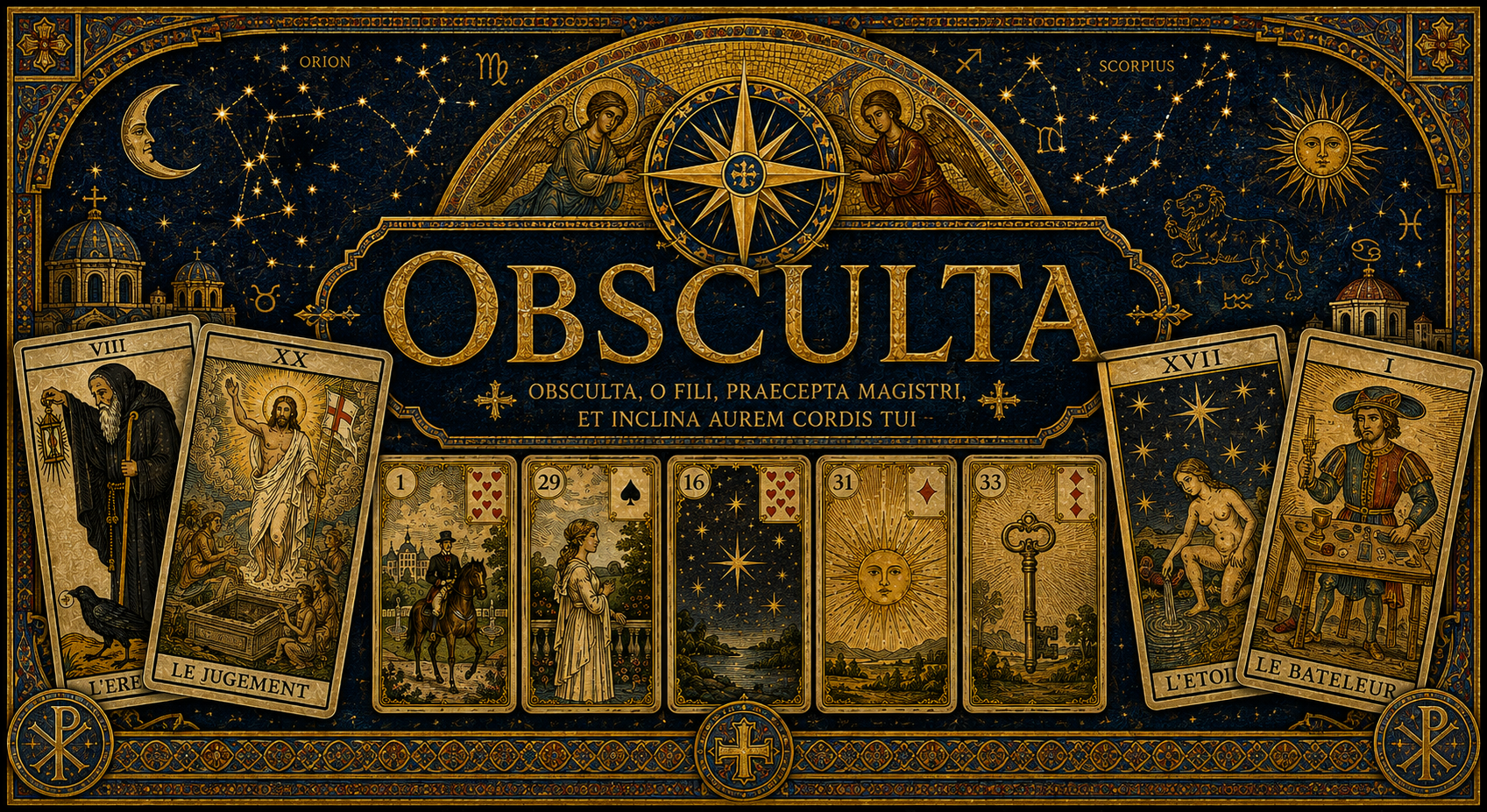
Perhaps this is why the concept of the eikōn became so important in my own work. Growing up amongst Eastern Catholics and Orthodox Christians, I was surrounded by icons. The icon was never merely a picture. It was a means of contemplation, a visible image directing the mind towards an invisible reality.
Over time, I came to approach the Tarot in a similar fashion.
This does not mean that Tarot cards are icons. They are not. Yet the habit of contemplation fostered by iconography profoundly shaped the way I read them. The image became more important than prediction, and meaning became more important than certainty.
This emphasis upon discernment is one reason why the writings of Thomas Merton have always resonated with me. Merton repeatedly warned against the false self: the collection of ambitions, fears, attachments, and illusions through which we often misperceive both ourselves and God. For Merton, contemplation was not about acquiring secret knowledge, but about learning to see reality more clearly.
In a very limited and imperfect way, this reflects my own experience of divination. The readings that mattered most were not those that provided certainty about the future, but those that challenged my assumptions and forced me to confront truths I would otherwise have preferred to ignore. They encouraged self-examination rather than self-importance, and reflection rather than control.
Another unexpected consequence of divination was that it strengthened my conviction that truth exists independently of my own wishes and preferences.
We live in an age increasingly shaped by relativism and, at times, a subtle form of solipsism. It is easy to imagine that reality is whatever we decide it to be, or that our feelings determine the truth of a situation. Yet my experience of divination repeatedly challenged such assumptions.
Many of the most valuable readings were not those that confirmed what I wanted to hear. Quite the opposite. They often forced me to confront perspectives I would have preferred to ignore. They revealed uncomfortable realities, exposed self-deception, and highlighted consequences that I had failed to consider.
In this respect, divination frequently acted as a corrective to my own subjectivity.
No matter how one understands the mechanism involved, a successful reading requires the reader to submit to something beyond themselves. The cards, symbols, or astrological configurations must be interpreted according to their nature rather than bent to suit personal desires. Over time, this fostered a growing appreciation for the existence of objective realities that remain true whether I happen to like them or not.
Perhaps this is one reason why divination ultimately drew me towards rather than away from Christianity. The Christian faith is founded upon the conviction that truth is not created by the individual. Reality is not something we invent but something we discover. We are called not to construct our own world, but to conform ourselves to the truth revealed by God.
For all its dangers and limitations, divination repeatedly reminded me that I was not the centre of reality. The world did not revolve around my desires, my fears, or my preferred narratives. Again and again it pointed beyond myself towards patterns, responsibilities, and truths that demanded recognition whether I welcomed them or not.
In that sense, it served not to reinforce the self, but to diminish it. And that, I have come to suspect, is often the beginning of genuine spiritual growth.
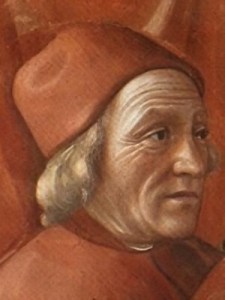
Amongst later thinkers, Marsilio Ficino exerted a particular influence upon me. Like many Renaissance Christians, he believed that the cosmos reflected an underlying order established by God. He did not see creation as devoid of meaning but as filled with traces of divine wisdom. The world was intelligible because it proceeded from an intelligible Creator.
Giovanni Pico della Mirandola was equally important, though he reached different conclusions in certain respects. Pico’s defence of human freedom and dignity left a lasting impression upon me. Whilst sceptical of many astrological claims, he nevertheless wrestled with profound questions concerning Providence, destiny, and free will.
Although they differed in many ways, both Ficino and Pico grappled with questions that remain central to my own thinking:
• How does Providence operate?
• How much freedom do we possess?
• What is the relationship between destiny and choice?
Those questions are also central to divination.
When I reflect upon the readings that mattered most in my life, I do not find a story of fate imposed from above. Rather, I find repeated invitations to responsibility. Again and again the cards seemed to direct my attention towards circumstances requiring wisdom, patience, forgiveness, humility, or courage.
In that sense, divination drew me closer to Providence rather than away from it.
At the heart of all these reflections lies a conviction that has grown stronger with age: whatever wisdom, success, talents, opportunities, or blessings I possess do not originate in me.
Pope Saint John XXIII expressed this beautifully:
“Who am I? Where do I come from? Where am I going? I am nothing. Everything I possess… was given me by God.”
The older I become, the more profoundly true those words seem.
One of the most unexpected lessons divination taught me was precisely this. Contrary to the common assumption that divination encourages self-importance or the illusion of control, my own experience was quite the opposite. Again and again, it reminded me how little control I truly possess. It repeatedly directed my attention away from myself and towards a larger order that I neither created nor fully understand.
Looking back over many years of readings, I find myself increasingly convinced that everything ultimately comes from God. What we call coincidences, opportunities, setbacks, talents, relationships, and even apparent accidents often reveal themselves, in retrospect, to be part of a larger providential pattern.
This does not mean that human freedom is an illusion. On the contrary, thinkers such as Pico della Mirandola placed enormous importance upon freedom precisely because human beings must choose how they respond to Providence. We are not puppets moved by fate, nor are we isolated individuals inventing our own reality.
Rather, it seems to me that fulfilment lies in the co-operation of freedom and Providence.
Human beings possess free will, yet that freedom is not merely the ability to choose arbitrarily. Its highest expression is the ability to choose the good. When we orient ourselves towards what is true, good, and beautiful, we gradually move towards the purpose for which we were created.
In that sense, I have come to think of destiny not as a chain that restricts freedom, but as the fulfilment that becomes possible when freedom is rightly exercised.
Divination never taught me that the future was fixed. What it often seemed to reveal, however, were those moments when I was either moving towards or away from my own good. Its value lay not in removing responsibility, but in deepening it.
For that reason, I cannot separate my experience of divination from my belief in Providence. Far from persuading me that I was master of my own fate, it repeatedly reminded me that my life forms part of a much larger story, one whose author is ultimately God.
My spiritual life has also been shaped profoundly by several saints. Saint John the Evangelist’s emphasis upon love and the indwelling presence of God remains deeply important to me. Saint Benedict’s balance of prayer, work, humility, and discipline continues to inform my understanding of the spiritual life.
Likewise, Saint Benoît-Joseph Labre has long fascinated me. His life stands as a reminder that holiness is not measured by status, success, or worldly achievement. Indeed, God’s Providence is often found in precisely those places society overlooks.
If divination has taught me anything, it is not certainty but uncertainty. It has repeatedly reminded me how limited my perspective truly is. The more I practise it, the less convinced I become that human beings can control their destinies through technique, formula, or secret knowledge.
What I have come to believe, however, is that Providence is real.
Looking backwards, many of the apparent accidents and coincidences of my life now seem woven into a larger pattern. I cannot prove that claim. Nor do I expect others to accept it merely because I believe it. Yet it remains my experience.
Most unexpectedly of all, that pattern led me back to the Church.
For that reason, I find myself living with a tension. I respect the Church’s teachings and understand the dangers it identifies. I acknowledge that there may come a time when my convictions develop further and my practices change accordingly.
Yet I cannot deny the path by which I arrived here.
For now, I see divination not as a replacement for faith, but as one of the many unexpected roads by which Providence led me home. Everything I do, I do it Faith in God. That includes divination.
Ultimately, I do not claim to possess a final answer to the question of divination and faith. I remain a traveller rather than an authority. What I can say, however, is that my journey has consistently revealed a world that is meaningful rather than meaningless, ordered rather than chaotic, and guided by Providence rather than blind chance alone. Divination did not teach me to trust in cards, stars, or secret knowledge. Rather, it taught me to look beyond them. It taught me that truth exists independently of my desires, that freedom carries responsibility, and that fulfilment is found not in imposing my will upon the world but in conforming myself to the Good. If one day I am led to leave divination behind, I hope I shall do so with gratitude. For whatever its place in my future, it was one of the instruments by which God drew me back to Himself.
Perhaps this is why I have always referred to myself as a student rather than an expert. The longer I have studied divination, astrology, theology, and life itself, the more aware I have become of the limits of my own understanding. Every reading that proved meaningful reminded me not of my knowledge, but of my ignorance; not of my powers, but of my dependence upon truths greater than myself. For this reason, I have never believed there are true experts in such matters, only fellow travellers who have spent longer reflecting upon them. Divination, at its best, taught me humility before my own limitations and failings, whilst simultaneously revealing the beauty of a Providence that continues to guide, correct, and teach us despite them.
§
Images:
Featured Image:
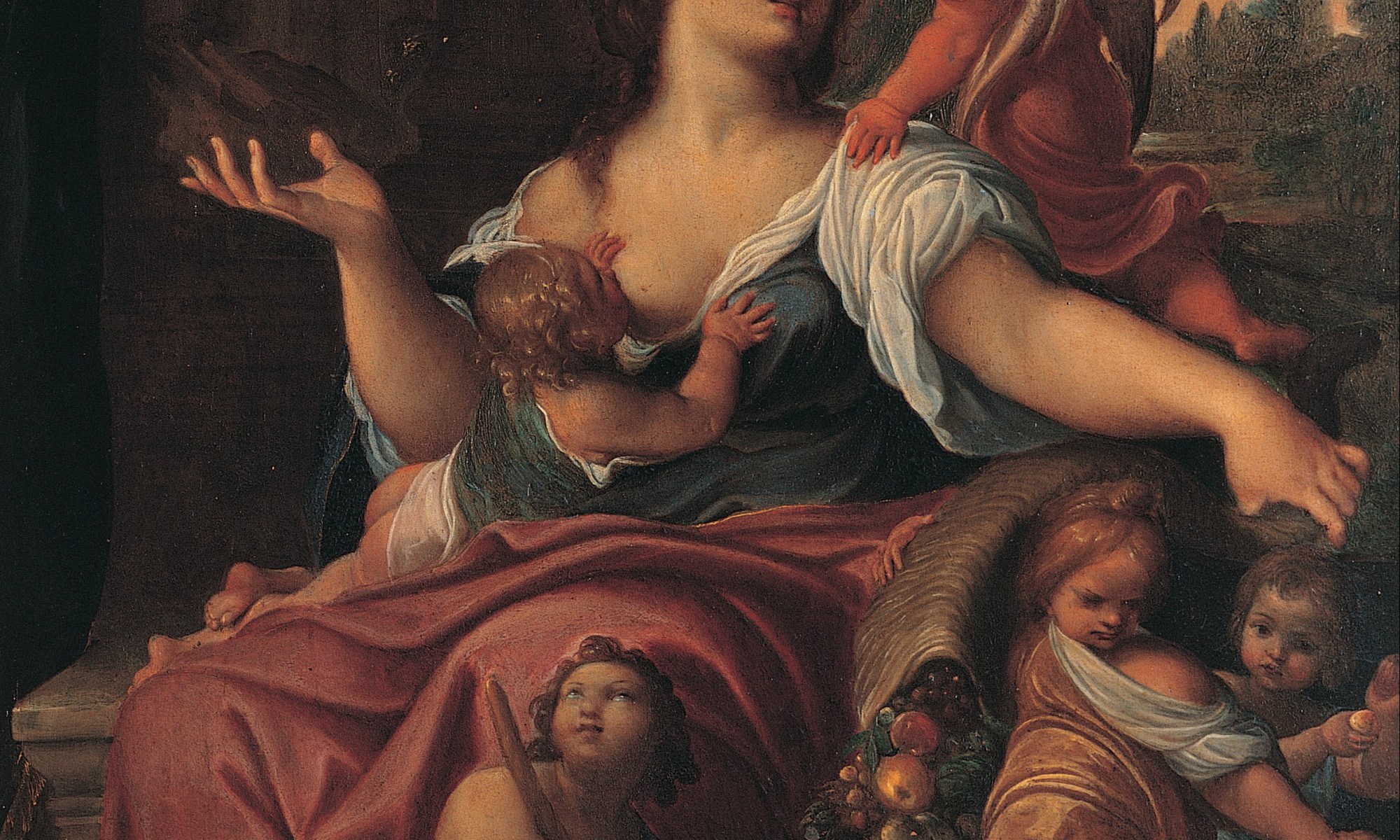
Ludovico Carracci, Allegory of Providence, Public domain, via Wikimedia Commons
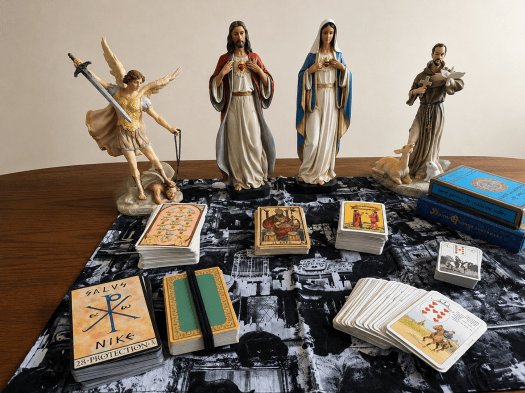
Author’s Reading Corner, August 2026

