
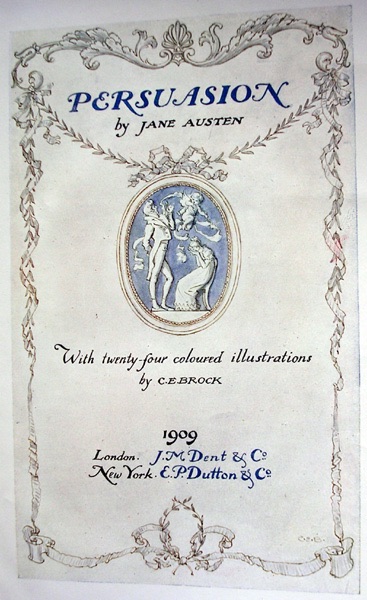
She had been forced into prudence in her youth, she learned romance as she grew older: the natural sequel of an unnatural beginning.
Jane Austen, Persuasion
Among the novels to which I return regularly, none has occupied my affections quite so consistently as Jane Austen’s Persuasion.

I first read Austen as a teenager and was immediately drawn to Austen’s wit, intelligence, and powers of observation. In some respects, however, I am not the sort of reader often associated with Austen’s work. I am male, decidedly unromantic by temperament, and have never been especially interested in novels simply because they culminate in a marriage. Yet it was never the romance that attracted me. Rather, it was Austen’s remarkable understanding of human nature.
Few writers observe people with such precision. Austen possesses a gift for exposing vanity, self-deception, pretension, and foolishness without ever becoming cruel. Her satire is sharp but rarely malicious. Beneath her wit lies a profound understanding of how people think, how they justify themselves, and how they often fail to understand their own motives.
In my younger years I found myself drawn principally to Emma and Northanger Abbey. The former delighted me because of its social comedy and the gradual humbling of Emma Woodhouse’s confidence in her own judgement. The latter appealed through its humour and its affectionate parody of Gothic literature. Like many young readers, I admired cleverness and energy.
As I entered my late twenties, however, I found myself returning increasingly often to Persuasion. Since then I have reread it at least once every year and continue to discover something new within its pages.
The older I become, the more I suspect that Persuasion is Austen’s most mature work.
It is a novel deeply concerned with time.
Most novels invite us to anticipate what lies ahead. Persuasion spends much of its time looking backwards. Its central characters are not confronting youthful possibilities but living with the consequences of decisions already made. Regret, memory, disappointment, missed opportunities, changing circumstances, and second chances occupy its pages.
These themes acquire a different significance with age.
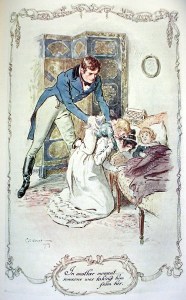
When one is young, life appears largely composed of future possibilities. As the years pass, one begins to realise that life is equally shaped by roads not taken, opportunities missed, friendships lost, and decisions whose consequences only become apparent much later.
This, I think, is where Anne Elliot becomes such a compelling character.
Among Austen’s heroines she is perhaps the most reflective. She stands slightly apart from the people around her, seeing them clearly whilst often feeling unseen herself. There are moments throughout the novel in which she appears almost detached from her own family, valued less for who she is than for the role she performs. She is surrounded by people, yet frequently lonely; connected, yet often isolated.
Many readers encounter such feelings at some point in life.
One reaches an age where family members have become who they are likely to become. Certain relationships are unlikely to change. Certain hopes have faded whilst others have unexpectedly emerged. One finds oneself reflecting not merely upon what has happened, but upon what might have happened.
Persuasion understands this condition with unusual sympathy.
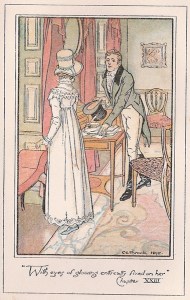
Unlike many novels of courtship, it does not celebrate youth’s first bloom but rather the possibility of renewal after disappointment. It acknowledges loss without surrendering to despair. It recognises the reality of regret whilst refusing to grant regret the final word.
Indeed, what moves me most about the novel today is not its romance but its quiet insistence that meaningful life remains possible even after mistakes have been made.
There is wisdom in that.
Perhaps this is why I continue to return to the book each year. Some novels are read once and set aside. Others become companions. They accompany us through different stages of life, revealing aspects of themselves only when we are ready to see them.
For me, Persuasion is such a companion.
The story has not changed since I first encountered it as a teenager. I have.
And with each passing year, Anne Elliot seems a little wiser, Austen a little more perceptive, and the novel itself a little deeper than I had previously understood.
§
Images:
Featured Image:
C. E. Brock (died 1938), Public domain, via Wikimedia Commons

